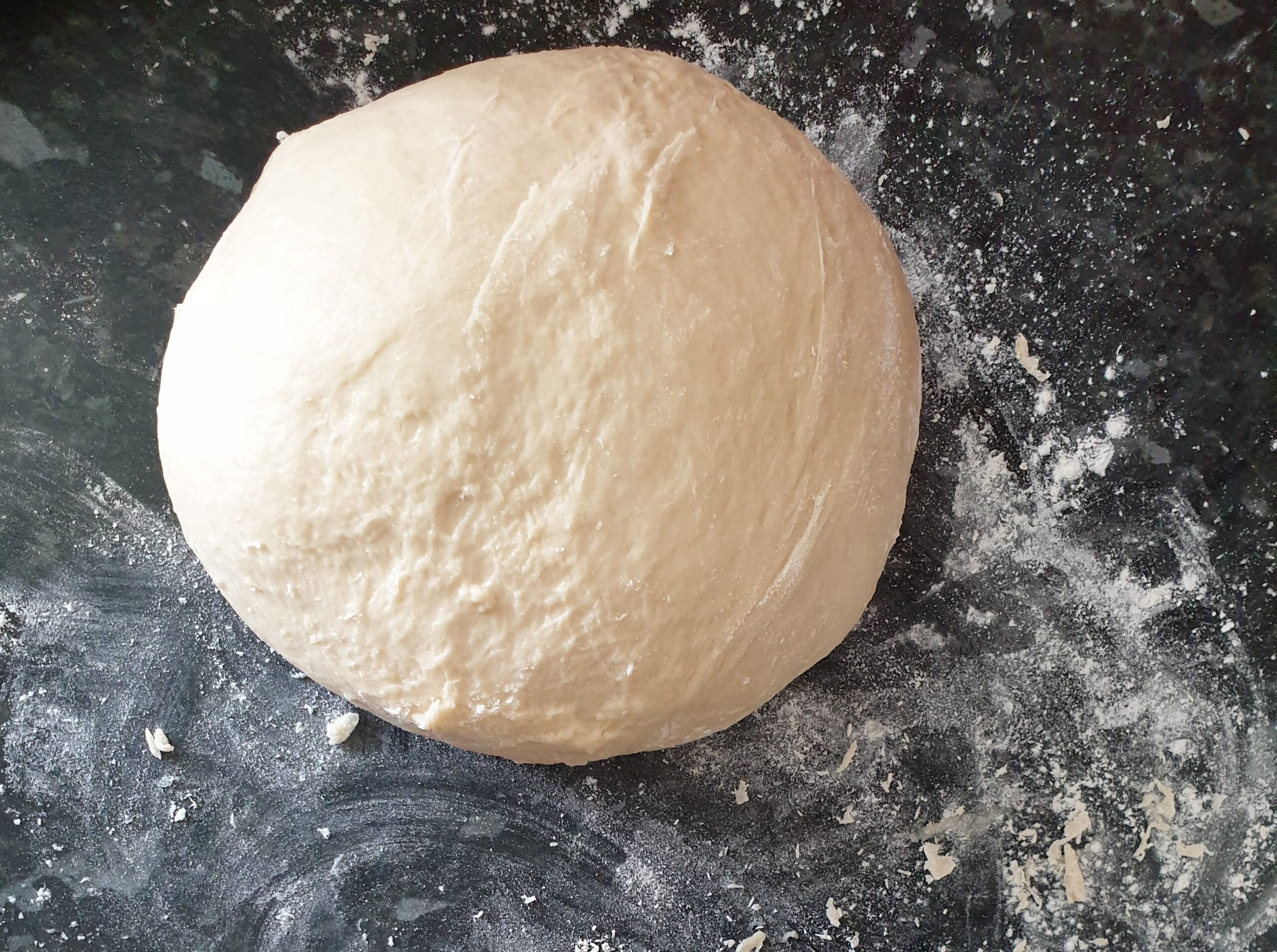
Sifting flour or mixing it with a hand whisk aerates the flour, making it lighter and free of lumps.
Adding salt later in the process is important to ensure that the yeast does not come into direct contact with any ingredients that might inhibit its growth.
The amount of water your dough will absorb depends on the type of flour used and the conditions in your kitchen. It’s best to start with about three-quarters of the water and gradually add more as needed, whether you are kneading by mixer or by hand.
Oiling the bowl prevents the dough from sticking, while oiling the dough itself helps keep it from drying out and provides essential elasticity for proofing.
The time required for proofing can vary based on the temperature of your kitchen, typically taking about 45 minutes to an hour. If proofing takes longer, don’t worry; a cooler kitchen may result in an extended proofing time.
To improve proofing, place your covered dough in the oven with only the oven light on.
Proofing your dough in the fridge over-night will deepen the flavours and improve the final taste
To check if your bread is baked, gently tap the bottom. If it sounds hollow, it’s done!